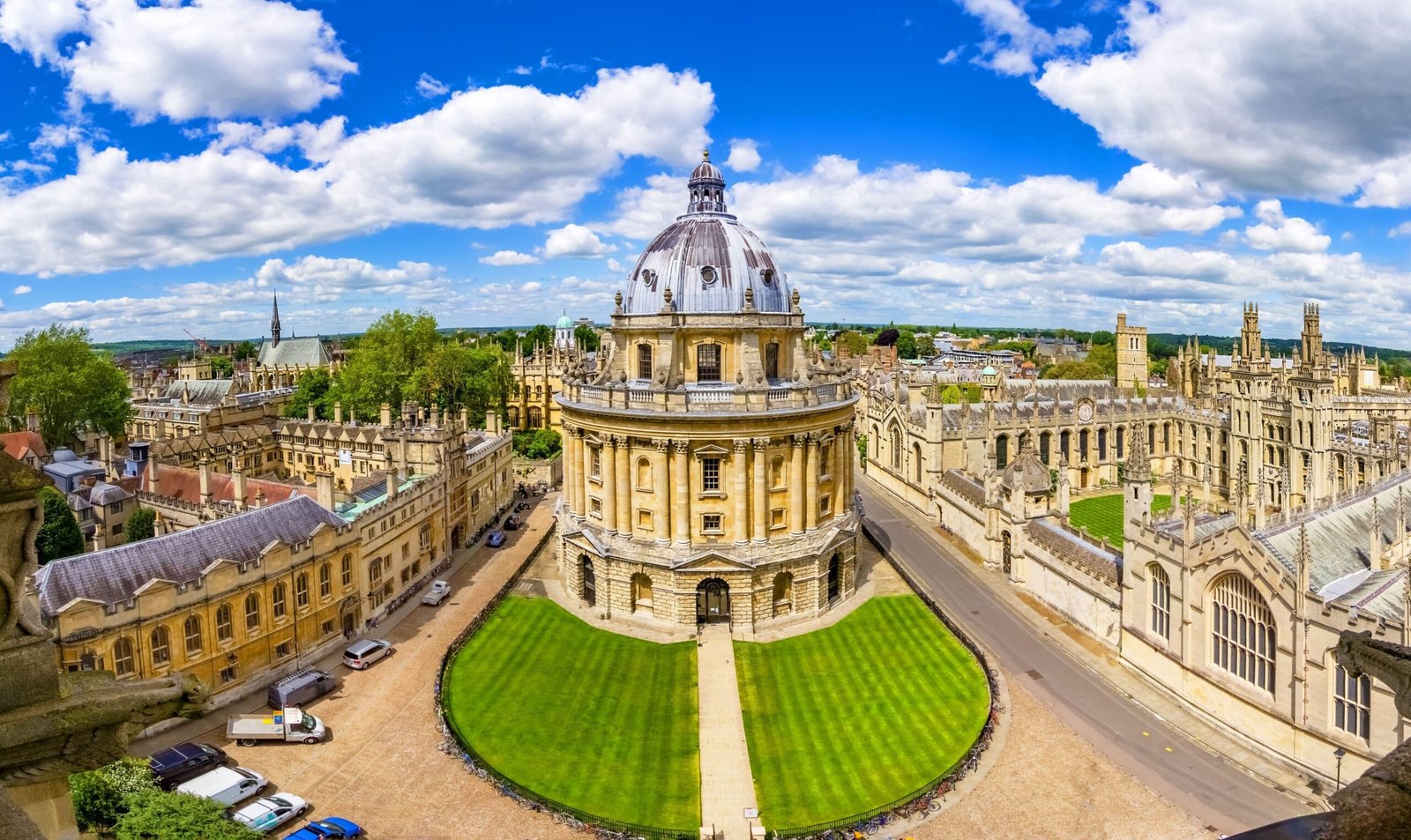
University of Oxford: History, Courses, Admissions, Campus Life, and Global Reputation
Introduction
The University of Oxford is one of the world’s most recognized universities, known for its long academic history, distinguished scholars, historic buildings, and commitment to research and education. Located in Oxford, England, the university attracts students and researchers from many countries. Its colleges, libraries, museums, and academic departments contribute to an educational environment that combines centuries of tradition with modern scientific discovery.
Oxford is widely associated with academic excellence, intellectual curiosity, and rigorous learning. Students study a broad range of subjects, including medicine, law, engineering, computer science, literature, economics, history, mathematics, and the natural sciences. Its educational model combines university-level teaching with the distinctive college system, creating opportunities for students to develop subject knowledge, analytical skills, and independent thinking.
For prospective students, understanding Oxford involves more than looking at its reputation. Applicants should learn about its courses, admissions requirements, teaching methods, costs, scholarships, accommodation, and student experience before deciding whether it matches their academic goals.
This guide explores the University of Oxford’s history, academic structure, programs, admissions process, campus environment, research activities, career opportunities, and the challenges students should consider when applying.
1. Overview of the University of Oxford
The University of Oxford is a collegiate research university in Oxford, a historic city in the south of England. It consists of academic departments and divisions alongside individual colleges and permanent private halls. These institutions work together to provide teaching, research opportunities, accommodation, and student support.
Oxford does not operate like a university with only one central campus. Its colleges and academic buildings are spread throughout the city. Many university facilities are located within walking or cycling distance of one another, allowing students to experience both university life and the wider community.
The university offers undergraduate and postgraduate education. Its students include school leavers, professionals, researchers, and international applicants with a wide variety of educational backgrounds.
Oxford is especially known for its tutorial system. In many subjects, students discuss their work with tutors individually or in very small groups. This approach encourages students to explain arguments, defend conclusions, respond to questions, and explore difficult ideas in depth.
Why Is Oxford So Well Known?
Several features contribute to the university’s reputation:
- A long history of higher education.
- Strong academic departments and research programs.
- A distinctive collegiate structure.
- Small-group teaching in many undergraduate courses.
- Extensive libraries and specialist research collections.
- International academic partnerships.
- Graduates who have contributed to science, government, literature, business, medicine, and other fields.
Its reputation does not mean every course or experience is identical. Students should compare individual programs, teaching arrangements, facilities, and career goals before choosing a university.
2. History of the University of Oxford
The University of Oxford has a history extending back many centuries. Teaching existed in Oxford by the late eleventh century, although the university’s exact founding date is not known. It gradually developed into an important centre of learning, attracting scholars and students from different parts of Britain and Europe.
During the medieval period, education focused heavily on subjects such as theology, philosophy, logic, law, and the liberal arts. Learning was influenced by religious institutions, classical scholarship, and the intellectual traditions of medieval Europe.
As the centuries passed, Oxford developed colleges, libraries, lecture spaces, and academic traditions that helped establish its identity. The college system became an important part of university life, providing communities in which students and scholars could live, study, and exchange ideas.
Development Through the Centuries
The university changed substantially as education and society evolved. The growth of scientific inquiry, printing, international trade, and new philosophical movements influenced academic work.
Over time, Oxford expanded its teaching and research beyond traditional subjects. Modern departments now investigate areas such as genetics, climate science, artificial intelligence, public health, engineering, economics, and global politics.
The university also experienced significant social changes. Access to higher education gradually broadened, and women gained admission to Oxford degrees in the twentieth century. Today, the university serves a diverse international student community, although access, affordability, and educational equality remain important topics across higher education.
Oxford in the Modern Era
Modern Oxford combines historical buildings and long-standing traditions with advanced laboratories, digital resources, contemporary teaching, and international research partnerships.
Researchers work on questions involving disease prevention, environmental change, technological development, economic policy, and human culture. The university’s historic identity remains visible, but its academic work continues to evolve in response to new knowledge and social needs.
3. Location and University Environment
Oxford is a historic university city in Oxfordshire, England. It is known for its academic buildings, museums, libraries, parks, gardens, shops, and cultural attractions.
The city provides a distinctive setting for university study. Students can encounter centuries-old architecture alongside modern research facilities, public transportation, restaurants, student societies, and local businesses.
Oxford’s location also provides access to other parts of the United Kingdom. London can be reached by rail or coach, although travel time depends on the service and destination. Students should check current transport schedules before planning regular journeys.
What Makes Oxford a Distinctive Place to Study?
The university is integrated into the city rather than isolated in one large campus. Colleges and departments are distributed across different areas, so students may travel between accommodation, lectures, libraries, and social activities.
This arrangement can make everyday life interesting, but it also means applicants should investigate the location of their chosen college and department. Travel requirements can differ according to course timetables and accommodation arrangements.
The city offers cultural and recreational opportunities, including museums, bookshops, historic sites, green spaces, sporting facilities, and student events. Students who enjoy history, reading, research, and intellectual discussion may find the environment particularly appealing.
4. Colleges and the Collegiate System
One of Oxford’s defining features is its collegiate structure. The university includes numerous colleges and permanent private halls, each with its own history, facilities, community, and traditions.
Academic departments generally organize subject teaching, lectures, examinations, and research. Colleges provide additional academic and pastoral support, accommodation for many students, dining facilities, social activities, and communities where students from different subjects can interact.
How Does the College System Work?
When applying for many Oxford undergraduate courses, applicants select a college or make an open application through the university’s admissions process. College arrangements vary by course and applicant type, so prospective students should follow the current instructions for their intended program.
A college can influence aspects of student life, such as where a student lives, eats, studies, and meets friends. However, students remain members of the wider university and normally receive teaching through both their college and academic department.
Choosing a College
Applicants should not choose a college based only on its photographs or historical reputation. More useful considerations include:
- Whether the college accepts applicants for the intended subject.
- Accommodation availability and arrangements.
- Accessibility and student support.
- Facilities and location.
- Financial support and bursaries.
- The academic and social environment.
An attractive historic building can be appealing, but the quality of the course and its suitability for a student’s goals should remain central to the decision.
5. Academic Programs and Subjects
Oxford offers a broad selection of academic programs across the humanities, social sciences, medical sciences, mathematical and physical sciences, and life and environmental sciences.
Course availability, entry requirements, teaching arrangements, and degree titles vary. Applicants should use the university’s official course directory to verify current information.
Humanities
Humanities subjects explore literature, language, history, philosophy, religion, and culture. Students learn to interpret texts, evaluate historical evidence, build arguments, and communicate complex ideas.
Depending on the course, students may study classical civilizations, English literature, modern languages, medieval history, philosophy, or related disciplines.
Humanities degrees can support careers in education, publishing, communications, public service, research, cultural institutions, and many other areas. Career outcomes depend on the student’s experience, skills, interests, and additional qualifications.
Law
Law students examine legal principles, institutions, cases, and methods of legal reasoning. Oxford’s law programs are academically demanding and require students to read carefully, compare arguments, interpret legal materials, and develop clear written analysis.
Students interested in a legal career should distinguish between completing an academic law degree and meeting the professional qualification requirements of the jurisdiction where they want to practise. Requirements differ between England and Wales and other countries.
Medicine
Medical education combines scientific knowledge with clinical learning and professional development. Students must understand biological systems, disease, diagnosis, patient communication, and ethical responsibilities.
Medicine is a highly competitive field, and applicants should carefully review Oxford’s current admissions requirements, selection process, course structure, and clinical training arrangements.
Students who intend to practise medicine outside the United Kingdom should also check the licensing and registration rules in their home country or intended destination.
Computer Science
Computer science explores computation, algorithms, programming, software, mathematical foundations, and the design of computing systems.
Depending on the program, students may investigate artificial intelligence, data structures, computational theory, programming languages, cybersecurity, and related fields.
Applicants should be prepared for substantial mathematical and analytical work. A strong interest in technology is useful, but students should also understand the theoretical foundations of the subject.
Engineering Science
Engineering Science applies mathematics and physical principles to the design, development, and analysis of systems and structures.
Students may explore mechanical systems, electrical engineering, materials, control systems, information engineering, and other specialist areas. Practical work, mathematical modelling, design projects, and laboratory learning can form part of the educational experience.
Economics and Management
Economics investigates how individuals, businesses, and governments make decisions about resources. Management examines organizations, strategy, leadership, and business operations.
Students develop quantitative, analytical, and communication skills that may be useful in consulting, finance, public policy, research, business, and entrepreneurship.
A degree does not guarantee employment in a particular industry. Internships, professional experience, technical skills, and individual performance also influence career opportunities.
Natural Sciences and Mathematics
Oxford offers study and research in subjects such as chemistry, physics, biology, mathematics, and related disciplines.
Students may develop laboratory skills, statistical reasoning, computational methods, experimental design, and the ability to evaluate scientific evidence.
These subjects can lead to further study or careers in research, healthcare, technology, industry, education, and public policy.
6. Undergraduate Education at Oxford
Undergraduate study at Oxford is designed to provide deep engagement with a chosen subject. Many programs require students to develop a strong foundation in a specific discipline from the beginning.
Students normally combine lectures, tutorials, practical sessions, independent reading, assignments, and examinations. The exact balance depends on the course.
The Tutorial System
Tutorials are among Oxford’s best-known teaching methods. A tutorial may involve one student or a small group discussing work with an academic tutor.
Students may prepare an essay, solve mathematical problems, analyse a text, or develop responses to challenging questions before attending.
During the session, tutors may ask students to explain their reasoning, identify weaknesses in an argument, compare alternative approaches, or defend a conclusion using evidence.
This method encourages independent preparation and active participation. It can also feel demanding because students must engage directly with difficult material rather than relying entirely on lectures.
Independent Study
Independent study is essential to success at Oxford. Students must organize their reading, review lecture notes, complete assignments, and prepare for tutorials or practical sessions.
Effective habits include setting weekly goals, breaking large tasks into manageable stages, reviewing feedback, and asking questions when a concept remains unclear.
Students should also make time for rest, exercise, and social activities. A sustainable routine is generally more useful than attempting to study continuously without breaks.
7. Postgraduate Study and Research
Oxford offers postgraduate education for students who want to develop specialist knowledge, pursue research, or prepare for professional careers.
Programs include taught master’s degrees, research degrees, doctoral study, and other advanced qualifications. The available options differ by department and subject.
Master’s Degrees
A master’s program may provide advanced academic training, professional preparation, or a combination of taught modules and research.
Applicants should compare course duration, curriculum, assessment methods, dissertation requirements, costs, and career relevance.
Some programs require previous study in a related field, while others may accept applicants from different backgrounds if they meet the stated criteria.
Doctoral Research
Doctoral students investigate a focused research question under academic supervision. They may contribute to scientific discoveries, historical research, technological development, social analysis, or other areas of knowledge.
A successful doctoral application generally requires a strong academic background and a research proposal or project fit, depending on the department. Some subjects also expect applicants to identify potential supervisors or demonstrate relevant research experience.
Doctoral study demands persistence, careful planning, and the ability to work independently. Students should understand funding arrangements and expected research commitments before accepting an offer.
Research Opportunities
Oxford’s research environment includes laboratories, libraries, museums, research centres, and collaborations with external institutions.
Research topics can range from fundamental scientific questions to practical problems involving public health, environmental sustainability, digital technology, and social policy.
Students should investigate the research interests of individual departments rather than assuming that every field has the same facilities or opportunities.
8. Admission Requirements
Admission to Oxford is competitive. Requirements vary according to the course, qualification system, applicant category, and year of entry.
The university evaluates applicants using criteria relevant to the chosen subject. Academic achievement is important, but some courses also use admissions tests, written work, interviews, portfolios, or other assessments.
Academic Qualifications
Applicants must demonstrate that their existing qualifications meet the requirements for their intended course.
Depending on the education system, accepted qualifications may include A-levels, the International Baccalaureate, and other qualifications recognized by Oxford. Requirements and equivalencies should be checked on the official course page.
Students applying from Pakistan or another country should confirm whether their specific qualification is accepted for direct entry. They should not assume that every national school certificate is treated as equivalent to every UK qualification.
Subject Preparation
Some degrees require previous study in particular subjects. For example, mathematics-heavy courses may require advanced mathematics, while science programs can require specific science subjects.
Applicants should review the exact subject prerequisites before preparing an application. Taking the wrong combination of school subjects can limit eligibility for some degrees.
Admissions Tests
Certain courses require an admissions test or other subject-specific assessment. Test requirements can change between admission cycles.
Applicants should confirm which test applies to their course, how to register, the test date, and any preparation guidance provided by the university.
Preparation should focus on the skills the test evaluates, such as problem-solving, critical reading, mathematical reasoning, or subject knowledge.
Written Work
Some humanities and related courses require samples of written work. These allow assessors to evaluate how applicants construct arguments, interpret evidence, and express ideas.
Applicants should follow the required format and submission instructions carefully. They should submit work that represents their own abilities and complies with all academic integrity rules.
Interviews
Oxford interviews are intended to explore applicants’ academic potential and approach to learning. Depending on the subject, candidates may be asked to discuss a text, solve a problem, interpret information, or develop an argument.
An interview is not simply a test of memorized facts. Assessors may be interested in how a student responds to unfamiliar information, considers feedback, and explains their thinking.
Useful preparation includes practising relevant academic problems, explaining ideas clearly, and becoming comfortable acknowledging uncertainty while working toward a solution.
9. How to Apply to Oxford
The application process requires planning and attention to detail. Deadlines and procedures differ by course and applicant type, so applicants must consult the official admissions guidance for their intended year.
Step 1: Research Courses
Start by identifying subjects that match your academic interests, strengths, and long-term plans.
Read the course description, entry requirements, assessment methods, and teaching structure. Compare closely related programs to understand their differences.
Step 2: Check Eligibility
Confirm that your qualifications meet the requirements. Check any required school subjects, admissions tests, written work, English-language evidence, and additional assessments.
If a requirement is unclear, seek clarification through official university guidance rather than relying solely on informal online discussions.
Step 3: Prepare the Application
Applications for many Oxford undergraduate courses are submitted through UCAS, the UK’s university application service.
Applicants should complete the relevant sections, provide accurate academic information, and follow the current instructions for the personal statement or other application components.
Graduate applicants generally apply through Oxford’s own graduate admissions process, using the instructions for the selected course.
Step 4: Prepare Supporting Documents
Depending on the course, documents may include academic transcripts, references, proof of qualifications, written work, a research proposal, or English-language evidence.
Graduate programs can have additional requirements, such as a CV, statement of purpose, or writing sample.
Step 5: Complete Required Assessments
Register for any required admissions tests or submit requested written work by the correct deadline.
Keep confirmation emails and records of submission. Missing an assessment requirement can affect an application even when the academic record is strong.
Step 6: Attend an Interview if Invited
Applicants invited to interview should read the instructions carefully and check the format, schedule, and technology requirements if the interview is online.
Preparation should focus on academic discussion rather than memorizing scripted answers.
Step 7: Review the Outcome and Next Steps
Applicants who receive an offer should review its conditions, deadlines, funding options, and accommodation arrangements.
An offer may require specific examination results or other evidence. Students should understand every condition and plan how to meet it.
10. Tuition Fees and Cost of Living
The cost of studying at Oxford depends on the course, fee status, accommodation, lifestyle, and funding available.
Students should distinguish between university tuition fees and living expenses. Their total budget may include accommodation, meals, books, transportation, clothing, communications, personal expenses, and travel.
Tuition Fees
Tuition fees differ between courses and between UK and international students. Some specialist programs may have different fee arrangements.
Because fees can change each academic year, applicants should use the official Oxford fee information for the exact course and intended entry year.
Students should also determine whether their fee status is classified as home or overseas. Citizenship, residency, and other rules can influence this classification.
Accommodation Expenses
Accommodation costs depend on the college, room type, contract duration, and whether utilities or meals are included.
Some students live in college accommodation, while others may use private housing where permitted and appropriate. They should compare location, contract conditions, transport needs, and total costs before choosing.
Everyday Living Costs
Food, books, local travel, clothing, and personal activities all contribute to the cost of living.
Students can create a realistic budget by estimating fixed monthly costs first and then setting limits for flexible spending.
Buying used textbooks where appropriate, cooking meals, sharing resources, and planning travel can help control expenses. Students should avoid assuming that living costs will be identical for every person.
11. Scholarships and Financial Aid
Oxford provides information about scholarships, bursaries, and other funding opportunities for eligible students. Availability depends on the program, level of study, nationality, financial circumstances, academic record, and specific award rules.
Some awards are intended for undergraduate students, while others support master’s or doctoral study. Funding may cover tuition fees, living expenses, research costs, or a portion of total expenses.
How to Search for Funding
Applicants should begin with the university’s official scholarship search resources. They should check eligibility, application deadlines, required documents, award value, and whether a separate application is necessary.
Students should not assume that receiving an admission offer automatically guarantees a scholarship.
Funding for International Students
International students should investigate scholarships that specifically accept applicants from their country or region. Some awards have restrictions based on nationality, subject, degree level, or financial need.
External foundations and government programs may also offer support, but applicants should confirm that the funding can be used at Oxford and understand any service or repayment conditions.
Financial Planning
Before accepting an offer, calculate the total expected cost and compare it with confirmed funding.
A responsible financial plan should include tuition, accommodation, living expenses, travel, insurance where applicable, and emergency savings. Do not rely on a scholarship application that has not yet been approved.
12. Student Life at Oxford
Student life includes academic work, friendships, college activities, clubs, sports, cultural events, and opportunities to explore Oxford.
The collegiate structure can help students meet peers from different countries and academic disciplines. College common rooms, dining areas, societies, and student events provide opportunities to build relationships outside formal classes.
Clubs and Societies
Students can participate in activities involving music, theatre, debating, volunteering, entrepreneurship, politics, science, languages, and many other interests.
Joining a society can help students develop teamwork, leadership, communication, and organizational skills.
Students should choose activities that fit their interests and available time. Taking part in every opportunity is neither necessary nor realistic, especially during demanding academic periods.
Sports and Fitness
Oxford offers a range of sporting activities through university and college organizations. Opportunities vary by sport and level of experience.
Students can investigate recreational clubs, competitive teams, fitness facilities, and outdoor activities. Regular physical activity may also help support a balanced study routine.
Cultural Experiences
Oxford’s museums, historic sites, libraries, music events, and public lectures offer opportunities to learn beyond the classroom.
Students can explore the city’s architecture, attend cultural performances, or take part in academic events when their schedules permit.
These experiences can make university life more rewarding and help students connect academic interests with the wider world.
13. Libraries and Learning Resources
Libraries are central to Oxford’s educational environment. Students may use college libraries, departmental collections, and major university libraries according to the rules of their course and institution.
Collections support a wide range of subjects, including literature, history, law, medicine, science, and social research.
Research and Study Facilities
Depending on the library and subject, resources may include printed books, academic journals, manuscripts, electronic databases, study spaces, and specialist collections.
Students should learn how to search catalogues, access digital materials, cite sources accurately, and evaluate the reliability of information.
Developing Research Skills
Good research involves more than finding a large number of sources. Students must identify relevant evidence, assess the credibility of publications, compare interpretations, and build a clear argument.
Academic librarians and departmental resources can help students develop these skills.
Students should also follow copyright requirements and academic integrity rules when using published materials.
14. Research, Innovation, and Technology
Oxford conducts research across many disciplines and supports work that advances knowledge and addresses practical challenges.
Researchers may study infectious diseases, cancer, renewable energy, climate change, artificial intelligence, materials science, economic development, and historical records.
Scientific Research
Scientific research can involve laboratory experiments, fieldwork, computational modelling, clinical studies, and collaboration with other institutions.
Students interested in research should review departmental projects and the expertise of academic staff. Opportunities differ between undergraduate, master’s, and doctoral programs.
Artificial Intelligence and Computing
Modern computing research includes machine learning, algorithms, robotics, data analysis, cybersecurity, and the social effects of digital systems.
These fields develop rapidly, so prospective students should examine the current curriculum rather than assuming every program offers the same technical specializations.
Medicine and Public Health
Research in medicine and public health can investigate disease mechanisms, treatment methods, health systems, prevention strategies, and patient outcomes.
The practical impact of research depends on evidence quality, responsible implementation, and collaboration with healthcare professionals and communities.
Innovation and Entrepreneurship
University research can contribute to new products, services, and organizations. Students may explore entrepreneurship through academic projects, competitions, mentoring, or relevant university initiatives.
However, not every research project becomes a commercial product, and successful innovation usually requires careful evaluation, resources, and long-term development.
15. Career Opportunities After Graduation
Graduates may pursue careers in business, government, education, healthcare, technology, law, research, communications, finance, and many other fields.
The usefulness of a degree depends on the subject, professional requirements, personal skills, work experience, and employment market.
Academic and Research Careers
Some graduates continue to postgraduate study and pursue academic or scientific research. These careers may involve teaching, publishing, laboratory work, data analysis, grant applications, and collaboration with other researchers.
Academic careers can be competitive, so students should understand the qualifications and experience expected in their chosen field.
Business and Finance
Graduates may apply analytical, communication, and problem-solving skills in finance, consulting, management, marketing, or entrepreneurship.
Relevant internships, professional qualifications, and practical experience can strengthen applications for particular roles.
Technology
Students from computing, mathematics, engineering, and related disciplines may explore roles in software development, data science, cybersecurity, technology research, and product development.
Career preparation can include building projects, developing technical portfolios, participating in internships, and practising professional communication.
Public Service and International Organizations
Graduates may work in government, public policy, charities, education, diplomacy, and international development.
Such careers may require specialized experience, language skills, professional qualifications, or a detailed understanding of policy and institutions.
Does an Oxford Degree Guarantee a Job?
No university degree guarantees employment. Oxford’s reputation may be valuable in some contexts, but employers also consider relevant skills, experience, performance, communication, and suitability for a role.
Students should use their time at university to build practical capabilities, develop professional relationships, and explore careers that fit their interests.
16. Advantages of Studying at Oxford
Oxford offers several potential benefits for students whose goals align with its academic environment.
Strong Academic Environment
The university provides access to experienced academics, structured courses, and opportunities for intellectual discussion.
Students can learn to evaluate evidence, communicate arguments, and approach complex problems systematically.
Small-Group Teaching
Tutorials and other small-group learning opportunities can provide detailed feedback and encourage active participation.
Students who prepare consistently may benefit from close engagement with academic material and tutors.
Broad Research Resources
Libraries, research centres, laboratories, and academic collaborations support learning across many disciplines.
The relevance of these resources depends on the student’s subject and access arrangements.
International Community
Students meet peers with different backgrounds, languages, experiences, and perspectives. This environment can encourage cross-cultural understanding and broader thinking.
Personal Development
Managing academic responsibilities, independent study, and extracurricular activities can help students develop self-discipline, time management, and resilience.
These skills can be useful beyond university, although they require active effort and reflection.
17. Challenges Students Should Consider
Oxford can be rewarding, but it is not the ideal choice for every student.
Competitive Admissions
Applicants may face high academic requirements, subject-specific tests, written work, and interviews. Strong grades alone do not guarantee an offer.
Students should prepare carefully while maintaining realistic alternative plans.
Intensive Academic Workload
The pace and depth of study can be demanding. Tutorials, assignments, examinations, practical work, and independent reading require consistent preparation.
Students should develop study habits before arrival and seek academic support when needed.
Financial Pressure
Tuition and living expenses can be substantial, especially for international students. Funding may be competitive or limited.
Applicants should calculate the full cost, investigate scholarships, and avoid making decisions based only on optimistic funding assumptions.
Adjustment to a New Environment
International students may need time to adapt to a new country, climate, academic system, and social environment.
Building friendships, seeking student support, and maintaining contact with family can help make the transition easier.
Balancing Study and Personal Life
A demanding academic schedule can make it difficult to balance study, exercise, rest, and social activities.
Students should plan their time realistically and recognize that wellbeing is an important part of sustainable academic performance.
18. Oxford for International Students
Oxford attracts applicants from many countries. International students should prepare for academic, financial, administrative, and practical requirements before travelling.
English-Language Requirements
Some applicants must demonstrate English-language proficiency through an accepted test or another recognized method.
The exact requirements depend on the course and the applicant’s circumstances. Students should check the current rules and accepted evidence on the official university website.
Visa and Immigration
Students who need a UK Student visa must meet the applicable immigration requirements. These may include evidence of admission, financial resources, identity documents, and other required information.
Visa rules can change, so applicants should consult official UK government guidance and university instructions rather than relying on outdated advice.
Accommodation and Arrival
Students should understand when accommodation becomes available, how to arrange arrival, and what documents they need to bring.
They should also plan travel, banking, communications, healthcare arrangements, and local transportation.
Cultural Adjustment
Moving to another country can involve changes in communication styles, food, weather, social customs, and academic expectations.
International student services and student societies may help newcomers find information and build a support network.
19. Tips for Preparing a Strong Application
A successful application begins with a clear understanding of the course and its requirements.
Build Subject Knowledge
Read beyond your regular school curriculum when appropriate. Explore introductory books, academic articles, lectures, or reputable educational resources related to your intended subject.
The aim is to develop genuine curiosity and the ability to discuss ideas thoughtfully.
Practise Problem-Solving
For courses involving mathematics, science, or logic, practise unfamiliar problems and explain your reasoning step by step.
For humanities and social sciences, practise interpreting evidence, comparing arguments, and writing clear analytical responses.
Use Feedback
Ask teachers or mentors to review your work and identify areas for improvement. Focus on understanding weaknesses rather than merely collecting praise.
Prepare Early
Create a calendar of application deadlines, test dates, document requirements, and scholarship opportunities.
Starting early reduces avoidable pressure and provides time to correct mistakes.
Keep the Application Honest
Provide accurate information and ensure that submitted work follows the relevant rules.
Do not invent achievements, exaggerate experience, or submit work that misrepresents your abilities. Authentic academic interests are more useful than unsupported claims.
20. Is Oxford the Right University for You?
Choosing a university is a personal decision that should consider academic interests, finances, learning style, location, and future plans.
Oxford may be suitable for students who enjoy intensive academic work, independent reading, detailed discussion, and a focused course of study.
It may be less suitable for someone who prefers a highly flexible curriculum, a particular professional program not offered by Oxford, or a different type of campus and student experience.
Questions to Ask Before Applying
- Does Oxford offer the exact subject I want to study?
- Do I meet the course’s academic requirements?
- Am I comfortable with intensive independent study?
- Can I manage the financial cost with confirmed funding?
- Do I understand the admissions tests and deadlines?
- Have I compared Oxford with other suitable universities?
- Will the course support my academic and professional goals?
Answering these questions can help applicants make a more informed decision.
21. Frequently Asked Questions
1. Where is the University of Oxford located?
The University of Oxford is located in Oxford, Oxfordshire, England, in the United Kingdom.
2. Is Oxford one of the world’s oldest universities?
Yes. Teaching in Oxford dates back to the late eleventh century, making it one of the oldest universities in the English-speaking world.
3. What courses can students study at Oxford?
Oxford offers programs across the humanities, social sciences, medical sciences, mathematical and physical sciences, life sciences, and other academic areas. Exact courses and degree structures should be checked in the official course directory.
4. Is admission to Oxford difficult?
Admission is competitive. Requirements vary by course and can include high academic achievement, admissions tests, written work, interviews, or other assessments.
5. Can international students apply to Oxford?
Yes. Oxford accepts international applicants, subject to the relevant academic, course-specific, language, and immigration requirements.
6. Does Oxford offer scholarships?
The university provides information about scholarships and other funding opportunities. Eligibility and award amounts vary, so applicants should review the current official funding guidance.
7. How does Oxford’s tutorial system work?
Tutorials involve academic discussion, often with one student or a small group and a tutor. Students prepare work in advance and receive feedback on their understanding and reasoning.
8. Is Oxford a single-campus university?
Oxford is a collegiate university with colleges, departments, libraries, and facilities spread throughout the city rather than one single enclosed campus.
9. Can students live in college accommodation?
Many students have access to college accommodation, but arrangements, availability, duration, and costs differ. Applicants should check the details for their college and course.
10. Does graduating from Oxford guarantee employment?
No. A degree may provide valuable academic experience, but employment depends on many factors, including skills, experience, professional requirements, and the job market.
11. What should international applicants check first?
They should review course eligibility, accepted qualifications, English-language requirements, application deadlines, funding, and any visa requirements.
12. Where can applicants find official information?
Applicants should use the University of Oxford’s official website for course details, admissions, fees, scholarships, and student information.
22. Official Resources and Further Reading
For accurate and up-to-date information, consult the university’s official resources:
- University website: https://www.ox.ac.uk/
- Undergraduate admissions: https://www.ox.ac.uk/admissions/undergraduate
- Graduate admissions: https://www.ox.ac.uk/admissions/graduate
- Undergraduate courses: https://www.ox.ac.uk/admissions/undergraduate/courses
- Fees and funding: https://www.ox.ac.uk/admissions/undergraduate/fees-and-funding
External image source for article illustration: https://commons.wikimedia.org/wiki/Category:University_of_Oxford
Conclusion
The University of Oxford combines a long academic history with modern teaching, research, and international collaboration. Its collegiate structure, tutorial-based learning, extensive resources, and diverse academic programs make it an important destination for students seeking a demanding university education.
However, prospective applicants should look beyond reputation and carefully evaluate course requirements, teaching methods, finances, student support, and career objectives. Oxford’s competitive admissions process requires preparation, realistic planning, and a genuine interest in the intended subject.
Students who research their options thoroughly can make a better-informed decision about whether Oxford is the right place to pursue their educational ambitions.